Energy Rebate Calculator 2026
Federal tax credits (25C & 25D) ended December 31, 2025. Find out what rebates are still available in your state.

What Changed in 2026?
Expired: Federal Tax Credits
The One Big Beautiful Bill (signed July 4, 2025) terminated Section 25C and 25D tax credits for any property placed in service after December 31, 2025. No more federal tax credits for residential energy improvements in 2026.
What this means for youStill Available: State Rebates
The HOMES ($4.3B) and HEAR ($4.5B) programs are still active, administered by individual states. Up to $8,000 for energy efficiency upgrades and $14,000 for electrification, depending on income.
HOMES program detailsStill Available: Utility Rebates
Many electric utilities offer their own rebate programs that stack on top of federal programs. These vary by provider and location. Some offer $1,000-$8,500 for heat pump installations.
Find your state's programsEnergy Rebates by State
Select your state to see all available energy rebate programs, including HOMES, HEAR, state incentives, and utility-specific rebates.
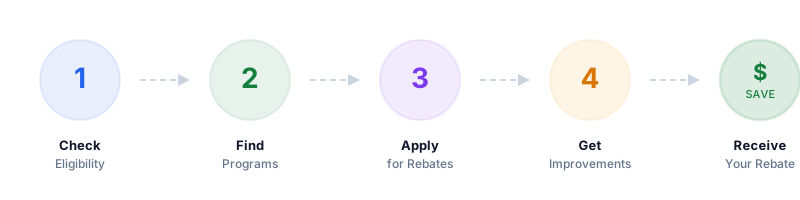
How to Get Your Energy Rebates
Rebate Calculators by Improvement Type

Heat Pump
Up to $8,000 in rebates

Heat Pump Water Heater
Up to $1,750 in rebates

Solar Panels
Up to Varies in rebates

Insulation
Up to $1,600 in rebates

Electrical Panel
Up to $4,000 in rebates

Wiring Upgrade
Up to $2,500 in rebates

Electric Stove
Up to $840 in rebates

Windows & Doors
Up to Varies in rebates

Electric Dryer
Up to $840 in rebates
Frequently Asked Questions
What energy rebates are still available in 2026?
After the One Big Beautiful Bill ended federal tax credits (25C and 25D) on December 31, 2025, the main rebate programs still available are HOMES (Home Owner Managing Energy Savings) and HEAR (Home Electrification and Appliance Rebates), both administered by individual states. Many states also offer their own incentives and utility-specific rebate programs.
How much can I get from HOMES rebates?
HOMES rebates range from $2,000 to $8,000 depending on your household income and energy savings achieved. Households at or below 80% of Area Median Income (AMI) can receive up to $8,000. Those between 80-150% AMI can get up to $4,000 at 50% of project costs.
What does the HEAR program cover?
HEAR (also known as HEEHRA) covers heat pump HVAC systems (up to $8,000), electrical panel upgrades (up to $4,000), wiring upgrades (up to $2,500), heat pump water heaters (up to $1,750), insulation and weatherization (up to $1,600), and electric stoves (up to $840). Maximum total per household is $14,000 for low-income households.
Can I still claim energy tax credits for 2025 improvements?
Yes. If you installed qualifying energy improvements before December 31, 2025, you can still claim the 25C or 25D tax credit on your 2025 tax return filed in 2026. The credits were only terminated for new installations after that date.
How do I know if I qualify for income-based rebates?
HOMES and HEAR rebates use Area Median Income (AMI) thresholds. If your household income is at or below 80% of your area's median income, you qualify for the highest rebate amounts. Between 80-150% AMI, you receive partial rebates. Our calculator uses your zip code and income to estimate your eligibility.
Are utility rebates separate from federal programs?
Yes. Many electric utilities offer their own rebate programs that can be stacked on top of HOMES and HEAR rebates. For example, Mass Save in Massachusetts offers up to $8,500 for heat pump conversions. Check your specific utility on our site for available programs.